
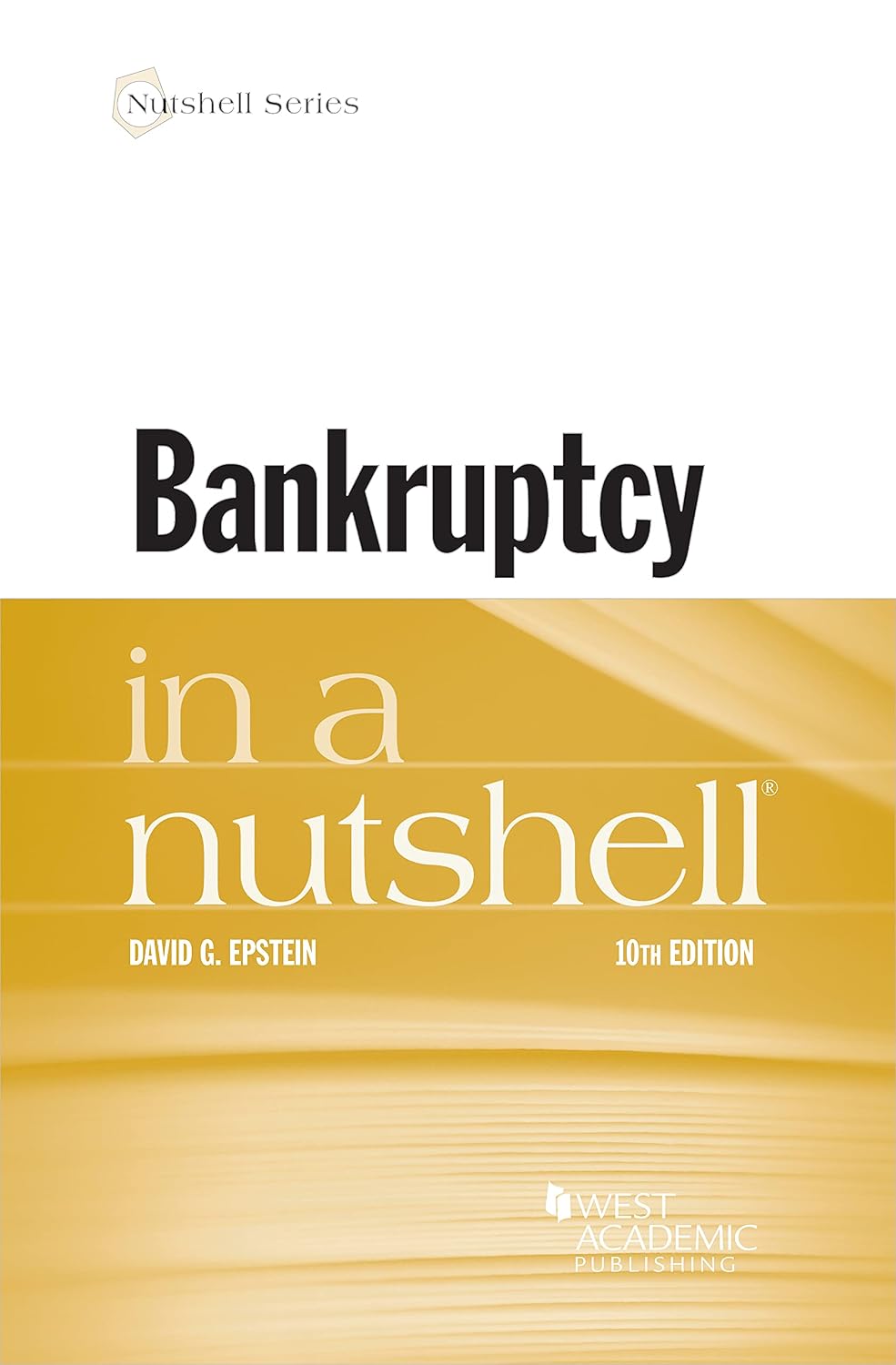
Bankruptcy in a Nutshell is worth considering for readers who want general bankruptcy education, but not as a substitute for case-specific advice; the 10th edition is listed at $65 and runs pages. Bankruptcy in a Nutshell Epstein, David: 9781647082543: Amazon.com: Books Its coverage can help you understand Chapter 7, Chapter 13, eligibility, debts, and timing, while filing instructions, costs, and exemption amounts remain unavailable from the evidence provided. Bankruptcy Basics
- The 10th edition was published on May 24, 2021. Epstein, David: 9781647082543: Amazon.com: Books
- The 10th edition is pages long. Epstein, David: 9781647082543: Amazon.com: Books
- Bankruptcy in a Nutshell is listed at $65 on Amazon. Bankruptcy in a Nutshell
- Chapter usually takes four to six months, while Chapter plans usually take three to five years. Chapter Bankruptcy vs. Chapter Bankruptcy
- Chapter can remain on a credit report for up to years, while Chapter can remain for up to seven years. What Is a Bankruptcy Discharge?

What is bankruptcy, and what debts can it discharge?
Bankruptcy is a legal process governed by federal bankruptcy laws, and Bankruptcy Basics describes both the laws and the bankruptcy process in general terms. Bankruptcy Basics Bankruptcy in a Nutshell is therefore best approached as background reading if you need to understand the vocabulary and broad structure before seeking advice.
At the conclusion of Chapter 7, a debtor receives a discharge that releases personal liability for certain dischargeable debts. Chapter bankruptcy – Liquidation under the… Most consumer debts, including medical bills and credit card balances, are generally reported as dischargeable. What Is a Bankruptcy Discharge? Unpaid alimony and child support, certain taxes, and federal student loans are among the debts reported as nondischargeable. What Is a Bankruptcy Discharge? Some taxes may still be dischargeable, depending on the facts and circumstances of the case. Chapter bankruptcy – Liquidation under the…
The official Bankruptcy Basics material is not a filing guide, and it isn’t a substitute for competent legal, accounting, or financial advice. Bankruptcy Basics That makes the book more suitable for general education than for deciding how your particular debts will be treated.
What are the main differences between Chapter and Chapter bankruptcy?
Chapter is commonly called the liquidation chapter because a trustee can sell nonexempt property and distribute the proceeds to creditors. What is the difference between bankruptcy cases… A Chapter trustee is also described as converting a debtor’s assets into cash for distribution among creditors. Chapter bankruptcy – Liquidation under the… The available evidence reports that Chapter discharges most unsecured debt. Which type of bankruptcy should I file?
Chapter takes a different route: an individual with regular income proposes to pay creditors a percentage of future income through a bankruptcy trustee. What is the difference between bankruptcy cases… Some debts may be repaid in full and others in part under the repayment plan. Which type of bankruptcy should I file? Reported Chapter plans last three to five years, with the period depending on the debtor’s income. What Is a Bankruptcy Discharge? Which type of bankruptcy should I file?
The reported timelines are also sharply different: Chapter usually takes four to six months, while Chapter repayment plans usually take three to five years. Chapter Bankruptcy vs. Chapter Bankruptcy The evidence says Chapter has no dollar limit on discharged debt, whereas Chapter has stated unsecured- and secured-debt limits. Chapter Bankruptcy vs. Chapter Bankruptcy
Who qualifies for Chapter 7, and how does the means test determine eligibility?
Chapter eligibility involves income, a means test, and the possibility of losing property that cannot be exempted under state law. What Is a Bankruptcy Discharge? The means test compares household income with state averages, and income below a threshold can qualify a filer for Chapter 7. Which type of bankruptcy should I file? Chapter is also reported as available to people whose income is below their state’s median or who can otherwise pass the means test. Which type of bankruptcy should I file?
Arizona provides a specific example in the available evidence: for Chapter petitions filed there after April 1, 2025, the listed median annual income for a one-person household is $70,919. Chapter Bankruptcy vs. Chapter Bankruptcy The court considers average household monthly income during the six months before the petition is filed. Chapter Bankruptcy vs. Chapter Bankruptcy
If household gross monthly income is below the Arizona median during the relevant period, the filer does not need to pass the means test. Chapter Bankruptcy vs. Chapter Bankruptcy If income exceeds that median, the filer must take the means test using Bankruptcy Form 122-A. Chapter Bankruptcy vs. Chapter Bankruptcy A book can explain the framework, but the evidence does not establish your eligibility.
How much money and property can you keep when filing for Chapter bankruptcy?
Many Chapter debtors keep all or most of their property by using bankruptcy exemptions. Which type of bankruptcy should I file? That protection is not unlimited: significant nonexempt equity or assets could be lost to satisfy debts. Which type of bankruptcy should I file?
The available evidence does not provide a universal dollar amount for the cash or property exemptions you may claim. Exemption rules can be important to your decision, but this ledger does not establish a single amount that applies to every filer. Bankruptcy in a Nutshell may be useful for learning why exemptions matter and how they fit into the Chapter structure, yet the evidence does not show that it supplies a case-specific exemption calculation.
For a buyer, that distinction matters. You can use the book as an overview of the issue, but you shouldn’t treat the general description as confirmation that a particular bank balance, vehicle, home interest, or other asset is protected. The available claims support the warning about possible nonexempt losses, not a precise property allowance.
What steps do you take to file for bankruptcy, and when should you stop paying bills?
The available official Bankruptcy Basics source provides general information about federal bankruptcy laws and the bankruptcy process, but it explicitly is not a guide for filing a bankruptcy case. Bankruptcy Basics That limitation applies to readers looking for a complete checklist of forms, deadlines, and procedural decisions.
The evidence provided does not specify a complete filing checklist, and it does not identify a general point at which every debtor should stop paying bills. You therefore shouldn’t use Bankruptcy in a Nutshell or general web guidance as an automatic instruction to stop payments. The right decision can depend on facts that are not supplied here.
The official source also says its material is not a substitute for advice from a competent attorney, accountant, or financial advisor. Bankruptcy Basics It says the courts cannot provide legal or financial advice. Bankruptcy Basics That makes the book a limited fit if your immediate need is case-specific filing instruction rather than general education.
How much does it cost to file for bankruptcy, including court fees and attorney fees?
The available bankruptcy claims do not provide court-fee or attorney-fee figures. They also do not support a complete estimate of professional or filing expenses for a bankruptcy case.
Bankruptcy in a Nutshell is listed at $65 on Amazon. Bankruptcy in a Nutshell That is the listed price of the book, not the cost of filing a bankruptcy case, hiring an attorney, or obtaining other professional help. The evidence supplies no basis for converting the book price into a case budget.
If you need a case-specific cost breakdown, the available evidence won’t provide one. The official Bankruptcy Basics material says it is not a substitute for advice from a competent attorney, accountant, or financial advisor. Bankruptcy Basics It also says the courts cannot provide legal or financial advice. Bankruptcy Basics As a purchase decision, the book may suit general research; as a source for your total bankruptcy expenses, it is not supported by the claims provided.
What happens to your credit, assets, and debts after filing for bankruptcy?
A Chapter trustee may convert a debtor’s assets into cash for distribution among creditors. Chapter bankruptcy – Liquidation under the… That means filing can affect both your assets and the debts eligible for discharge; the result is not simply a promise that every debt disappears.
Bankruptcy can cause a credit-score drop of up to points, according to the available evidence. What Is a Bankruptcy Discharge? A typical Chapter case is reported as taking four to six months, after which eligible unpaid debts are discharged. What Is a Bankruptcy Discharge? Another source gives a typical Chapter duration of three to four months, so the supplied sources do not offer one single timeline. Which type of bankruptcy should I file?
Bankruptcy in a Nutshell is most defensible here as general background. The evidence supports learning about trustee asset sales, possible credit effects, case duration, and discharge of eligible debts, but it does not promise a particular credit outcome or tell you which of your debts will qualify. Your result could depend on facts not provided by the listing or ledger.
How long does bankruptcy stay on your credit report, and when can you file again?
Chapter can remain on a credit report for up to seven years from the filing date, while Chapter can remain for up to years. What Is a Bankruptcy Discharge? A separate reported comparison gives the same seven-year and 10-year periods. Chapter Bankruptcy vs. Chapter Bankruptcy
The evidence also reports an eight-year restriction on filing under Chapter after receiving a Chapter or Chapter discharge. Which type of bankruptcy should I file? After receiving a Chapter discharge, a person must wait at least four years before filing Chapter 13. Which type of bankruptcy should I file? These are legal timing rules, not product specifications.
The 10th edition of Bankruptcy in a Nutshell was published on May 24, 2021, and is pages long. Epstein, David: 9781647082543: Amazon.com: Books Amazon lists its availability as only seven left in stock, more on the way. Bankruptcy in a Nutshell Those publication and availability details are separate from the rules on credit reporting and filing again. If you’re deciding whether you can refile, neither the book nor this review should replace case-specific legal advice.
Pros and Cons
Pros
- The 10th edition is pages long, giving buyers a substantial general-information resource. Epstein, David: 9781647082543: Amazon.com: Books
- The subject matter covers the general federal bankruptcy laws and bankruptcy process. Bankruptcy Basics
- The available evidence supports useful coverage of Chapter liquidation and Chapter repayment structures. What is the difference between bankruptcy cases…
- The book is priced at $65 on Amazon. Bankruptcy in a Nutshell
Cons
- The available evidence does not establish a complete filing checklist or a general rule for when to stop paying bills. Bankruptcy Basics
- The evidence provides no court-fee or attorney-fee figures for a bankruptcy case. Bankruptcy in a Nutshell
- The available claims do not provide universal dollar amounts for Chapter cash or property exemptions. Which type of bankruptcy should I file?
- General bankruptcy information is not a substitute for competent legal, accounting, or financial advice. Bankruptcy Basics
Final Verdict
| Source | Chapter case duration | Chapter plan duration |
|---|---|---|
| experian.com What Is a Bankruptcy Discharge? | four to six months What Is a Bankruptcy Discharge? | three to five years What Is a Bankruptcy Discharge? |
| peoples-law.org Which type of bankruptcy should I file? | three to four months Which type of bankruptcy should I file? | three or five years, depending on the debtor's income Which type of bankruptcy should I file? |
| stoneroselaw.com Chapter Bankruptcy vs. Chapter Bankruptcy | four to six months Chapter Bankruptcy vs. Chapter Bankruptcy | three to five years Chapter Bankruptcy vs. Chapter Bankruptcy |
Key Takeaways
- Use Bankruptcy in a Nutshell to learn the broad differences between Chapter and Chapter 13, not to obtain a case-specific filing plan. What is the difference between bankruptcy cases…
- Treat dischargeability as debt-specific because support obligations, certain taxes, and federal student loans are reported as nondischargeable, while some taxes may depend on the case. Chapter bankruptcy – Liquidation under the… What Is a Bankruptcy Discharge?
- Do not assume a universal exemption amount protects your cash or property; the available evidence provides no single dollar figure. Which type of bankruptcy should I file?
- Separate the book’s $65 price from court, attorney, and other bankruptcy costs, which are unavailable in the evidence. Bankruptcy in a Nutshell
- Remember that Chapter and Chapter have different reported credit-report periods and refiling restrictions. What Is a Bankruptcy Discharge? Which type of bankruptcy should I file?
Frequently Asked Questions
What disqualifies you from filing chapter bankruptcy?
The evidence does not provide a complete list of disqualifying circumstances. Chapter eligibility involves household income, the means test, and property that may not be exempt; income above the relevant median can require Form 122-A. What Is a Bankruptcy Discharge? Chapter Bankruptcy vs. Chapter Bankruptcy
Is a chapter bankruptcy worth it?
The available evidence cannot decide whether Chapter is worth it for you. Chapter lets a person with regular income repay creditors through a trustee, and plans generally last three to five years. What is the difference between bankruptcy cases… What Is a Bankruptcy Discharge?
How much money can I have in the bank for Chapter 7?
No universal bank-balance amount is provided in the evidence. Many Chapter debtors keep all or most property through exemptions, but significant nonexempt equity or assets could be lost to satisfy debts. Which type of bankruptcy should I file?

Do you stop paying bills before Chapter 7?
The available evidence does not identify a general point when every debtor should stop paying bills. Bankruptcy Basics is general information, not a filing guide or substitute for competent professional advice. Bankruptcy Basics
Sources
- Bankruptcy in a Nutshell (2026-10-01)
- Epstein, David: 9781647082543: Amazon.com: Books
- Bankruptcy Basics
- Chapter Bankruptcy vs. Chapter Bankruptcy (2025-06-04)
- What Is a Bankruptcy Discharge? (2026-02-04)
- Chapter bankruptcy – Liquidation under the bankruptcy code
- What is the difference between bankruptcy cases filed under chapters 7, 11, and 13?
- Which type of bankruptcy should I file?
Disclosure: As an Amazon Associate, I earn from qualifying purchases.