
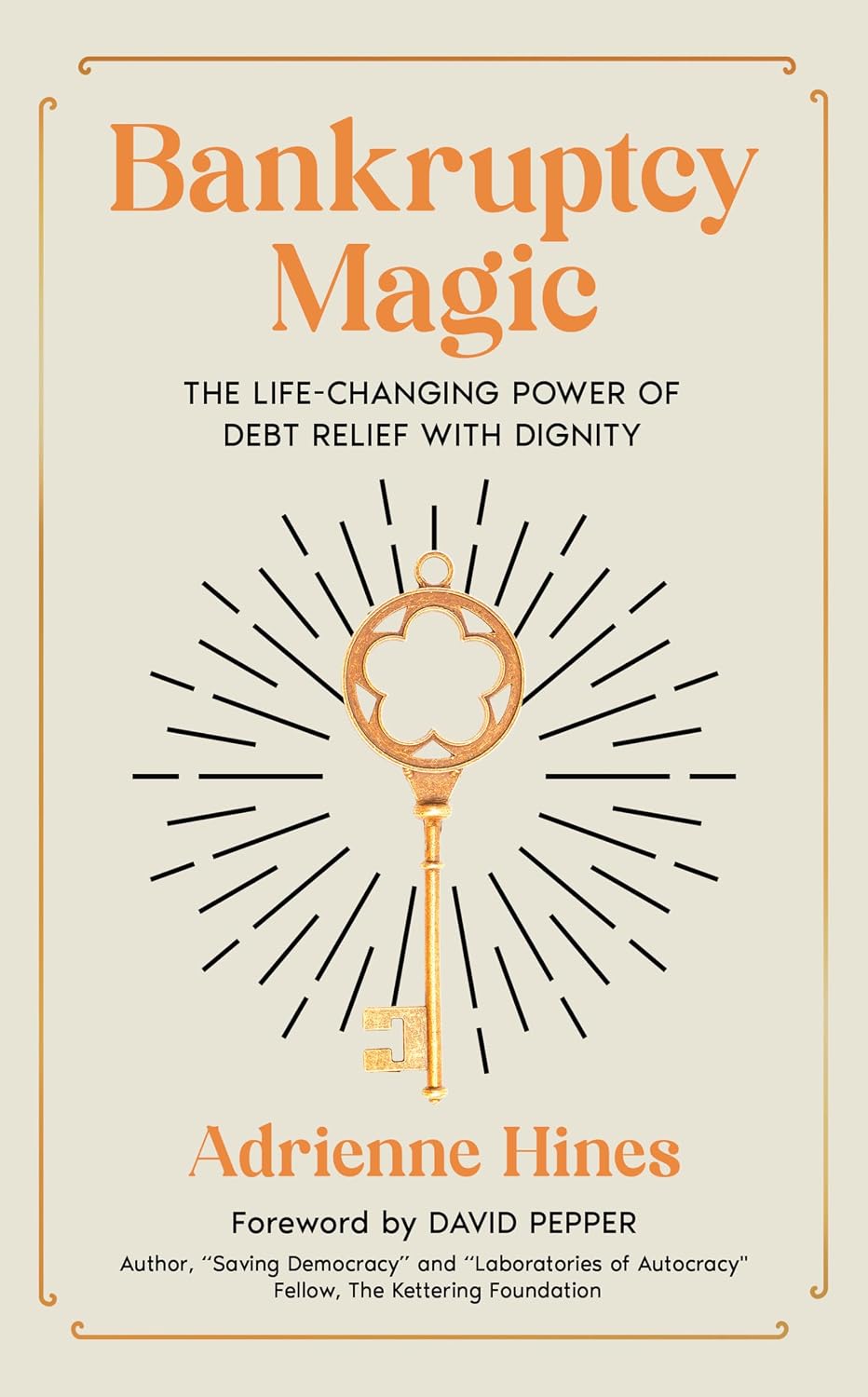
Bankruptcy Magic: The Life-Changing Power of Debt Relief with Dignity is worth considering if you need an accessible introduction to Chapter and debt-relief choices, especially given its Goodreads rating of 4.50 from ratings Books by Mark Imperial (Author of Stress-Free…. It isn’t a substitute for case-specific legal advice, and the ledger provides no Amazon price, format, page count, or verified Amazon-review sample.
- Chapter can discharge certain debts and release an individual debtor from personal liability for discharged debts Chapter – Bankruptcy Basics.
- Goodreads lists Bankruptcy Magic with a 4.50 average rating from ratings Books by Mark Imperial (Author of Stress-Free….
- The listed Chapter court charges are a $245 filing fee, a $75 administrative fee, and a $15 trustee surcharge Chapter – Bankruptcy Basics.
- Most Chapter cases close in three to six months How to Qualify for Bankruptcy.
- Debt management plans typically run for to months, while debt settlement typically takes to months What's the Difference? · National Debt….
What does Bankruptcy Magic explain about bankruptcy debt relief and alternatives?
Bankruptcy Magic: The Life-Changing Power of Debt Relief with Dignity appears aimed at readers trying to understand the emotional and practical side of debt relief. Adrienne Hines says she has spent nearly three decades guiding individuals and families through those steps New Book by Adrienne Hines Titled Bankruptcy…. She also describes having guided thousands of people through debt-related options in her legal practice and online New Book by Adrienne Hines Titled Bankruptcy….
Chapter bankruptcy can discharge certain debts and release an individual debtor from personal liability for discharged debts Chapter – Bankruptcy Basics. That differs from a debt management plan, which repays debt in full through one lower-interest monthly payment What's the Difference? · National Debt…. Debt settlement instead seeks a reduced lump-sum payoff What's the Difference? · National Debt…. Debt management plans are usually run through nonprofit credit counseling agencies and distribute one monthly payment to creditors What's the Difference? · National Debt….
Goodreads lists the book at 4.50 from ratings Books by Mark Imperial (Author of Stress-Free…. The available material doesn’t establish the book’s complete coverage, and no Amazon price, Amazon rating, format, page count, or verified buyer-review sample is available.
Which debts can be discharged in Chapter 7, and which usually cannot?
Chapter treatment depends on the type of debt, so you shouldn’t assume that filing eliminates every balance. Most consumer debts, including medical bills and credit card bills, are described as dischargeable in bankruptcy Non-Dischargeable Debt Under Bankruptcy Law |…. Chapter can therefore be relevant when unsecured consumer debt is the main pressure, although the ledger doesn’t provide individualized legal conclusions.
Alimony, child support, certain taxes, and certain education-related debts are listed among debts that are not discharged Chapter – Bankruptcy Basics. Student loans are generally listed as nondischargeable, and many types of taxes are also generally nondischargeable Non-Dischargeable Debt Under Bankruptcy Law |…. “Generally” matters: the available claims don’t define every exception or explain how a particular debt would be treated.
A court may deny a Chapter discharge if you fail to comply with rules or procedures, including hiding property to defraud creditors Non-Dischargeable Debt Under Bankruptcy Law |…. Bankruptcy Magic may help frame the questions you need to ask, but the ledger doesn’t establish that the book provides complete legal coverage of every debt category.
Who qualifies for Chapter 7, and how does the means test work?
Chapter eligibility can depend on your income, household circumstances, expenses, and debt profile. For an individual debtor whose current monthly income is more than the state median, the means test determines whether the filing is presumptively abusive Chapter – Bankruptcy Basics. Current monthly income means the average monthly gross income over the six full calendar months before filing How to Qualify for Bankruptcy.
If your gross income is below the state median family income, you generally pass the means test without further steps How to Qualify for Bankruptcy. If your income exceeds the median, you deduct allowed monthly expenses to calculate disposable income How to Qualify for Bankruptcy. The means test presumes abuse when five-year income after specified expenses and secured debt payments meets the stated statutory threshold Chapter – Bankruptcy Basics. The ledger doesn’t reproduce that threshold, so no numerical cutoff can be supplied here.
You generally must also receive credit counseling from an approved agency within days before filing to be a Chapter debtor Chapter – Bankruptcy Basics. These rules make Bankruptcy Magic more useful as an orientation guide than as a personal eligibility decision.
What does Chapter cost, and what steps start the case?
The listed Chapter court charges total $335: a $245 filing fee, a $75 administrative fee, and a $15 trustee surcharge Chapter – Bankruptcy Basics. That figure is only the court charges listed in the ledger. Attorney fees, document-preparation costs, and other possible expenses aren’t available, so you shouldn’t treat $335 as a complete filing price.
A Chapter case begins when you file a petition with the bankruptcy court serving the relevant area Chapter – Bankruptcy Basics. The case trustee then holds a meeting of creditors between and days after the petition is filed Chapter – Bankruptcy Basics. With the court’s permission, individual debtors may pay court fees in up to four installments, with the final installment generally due within days after filing Chapter – Bankruptcy Basics.
The process has a clear outline, but the available evidence doesn’t say how Bankruptcy Magic handles forms, local procedures, attorney selection, or document preparation. Those omissions matter if you want a practical filing manual rather than a general explanation of debt relief.
How might bankruptcy affect your credit score, credit report, and cards?
The available Chapter claims explain discharge and possible asset consequences, but they don’t provide a specific credit-score change, reporting duration, or rule covering every existing credit card Chapter – Bankruptcy Basics. No ledger evidence supports a numerical prediction about how filing would affect your score. A reader should therefore be skeptical of any precise recovery promise not documented in the available material.
Debt settlement carries a different reported risk profile. Programs usually ask people to stop paying creditors and save money in a dedicated account, which can lower credit scores and lead to collection calls or lawsuits What's the Difference? · National Debt…. Debt management plans keep accounts current, which the source says protects credit What's the Difference? · National Debt….
The ledger supplies no post-bankruptcy credit-rebuilding steps, such as a schedule for applications, payments, or score recovery. Bankruptcy Magic may help you understand the decision, but the documented evidence doesn’t support calling it a practical credit-rebuilding guide. Your existing cards also require case-specific advice that this review cannot provide.
What assets and risks should you compare before filing?
Chapter doesn’t use a repayment plan; a trustee sells nonexempt assets and uses the proceeds to pay creditors Chapter – Bankruptcy Basics. A filing may therefore result in the loss of property when assets aren’t exempt Chapter – Bankruptcy Basics. The available claim also says Chapter filers must be current on mortgage payments and that nonexempt home equity may be at risk How to Qualify for Bankruptcy. If you own property or have mortgage arrears, a general book review cannot tell you what will happen to your home.
Debt settlement presents different risks rather than no risks. Stopping payments can lower credit scores and lead to collection calls or lawsuits What's the Difference? · National Debt…. Settlement may also involve fees of to percent of enrolled debt, possible taxes on forgiven amounts, and credit damage What's the Difference? · National Debt….
You shouldn’t rely on Bankruptcy Magic alone if your situation involves property, mortgage arrears, complicated taxes, or education debt. The ledger provides no individualized legal guidance, and the right comparison depends on facts the book’s documented claims don’t supply.
How long does Chapter take, and what can you do afterward?
Most Chapter cases close in three to six months How to Qualify for Bankruptcy. In most cases, the discharge order is issued to days after the date first set for the meeting of creditors, unless an objection or extension motion affects the timing Chapter – Bankruptcy Basics. The meeting itself occurs between and days after the petition is filed Chapter – Bankruptcy Basics.
Those milestones differ from the timelines for alternatives. Debt management plans typically run for to months, while debt settlement typically takes to months What's the Difference? · National Debt…. A shorter Chapter timeline doesn’t mean the option is automatically better; dischargeability, assets, income, and credit consequences still matter.
The ledger provides no verified post-bankruptcy credit-rebuilding actions, so this review won’t invent a recovery schedule. Bankruptcy Magic is supported by Hines’s stated nearly 30-year bankruptcy attorney practice in Northwest Ohio New Book by Adrienne Hines Titled Bankruptcy…, its debt-relief subject, and a 4.50 Goodreads average from ratings Books by Mark Imperial (Author of Stress-Free…. That rating is a reader signal, not proof of legal or financial outcomes.
Pros and Cons
Pros
- The book addresses bankruptcy and debt relief with a focus on reclaiming financial control, according to Adrienne Hines’s stated experience New Book by Adrienne Hines Titled Bankruptcy….
- Hines says she has guided thousands of people through debt-related options in her legal practice and online New Book by Adrienne Hines Titled Bankruptcy….
- Goodreads lists a 4.50 average rating from ratings Books by Mark Imperial (Author of Stress-Free….
- The subject covers a potentially shorter Chapter timeline than debt management plans or debt settlement programs How to Qualify for Bankruptcy What's the Difference? · National Debt….
Cons
- The available material doesn’t establish the book’s complete legal coverage of discharge exceptions, eligibility, or local procedures.
- The ledger provides no post-bankruptcy credit-rebuilding steps or numerical credit-score prediction.
- The listed $335 in Chapter court charges excludes unavailable attorney fees, document-preparation costs, and other possible expenses Chapter – Bankruptcy Basics.
- Chapter may result in the loss of nonexempt property, and nonexempt home equity may be at risk Chapter – Bankruptcy Basics How to Qualify for Bankruptcy.
- No Amazon price, Amazon rating, format, page count, or verified Amazon-buyer review sample is available.
Final Verdict
| Milestone | Timing |
|---|---|
| Meeting of creditors Chapter – Bankruptcy Basics | Between and days after the petition is filed Chapter – Bankruptcy Basics |
| Discharge order Chapter – Bankruptcy Basics | 60 to days after the date first set for the meeting of creditors Chapter – Bankruptcy Basics |
| Case closure How to Qualify for Bankruptcy | Three to six months How to Qualify for Bankruptcy |
Key Takeaways
- Use Bankruptcy Magic to understand Chapter and compare it with debt management and settlement, not to replace individualized legal advice.
- Check whether your debts are generally dischargeable before treating bankruptcy as a solution Chapter – Bankruptcy Basics Non-Dischargeable Debt Under Bankruptcy Law |….
- Review nonexempt property and home equity risks before filing Chapter – Bankruptcy Basics How to Qualify for Bankruptcy.
- Treat the listed $335 in court charges as incomplete because attorney and preparation costs are unavailable Chapter – Bankruptcy Basics.
- Don’t expect this review to provide a credit-rebuilding schedule because no verified post-bankruptcy steps appear in the ledger.
Frequently Asked Questions
What types of debt cannot be forgiven in chapter 7?
Alimony, child support, certain taxes, and certain education-related debts are listed among debts not discharged in Chapter Chapter – Bankruptcy Basics. Student loans and many types of taxes are also generally listed as nondischargeable Non-Dischargeable Debt Under Bankruptcy Law |….
What is the most legitimate debt relief program?
The ledger doesn’t identify one universally most legitimate program. Debt management repays debt in full through one lower-interest payment, while debt settlement seeks a reduced lump-sum payoff What's the Difference? · National Debt…. Chapter can discharge certain debts but may put nonexempt property at risk Chapter – Bankruptcy Basics.
Do you lose your credit cards with debt relief?
The available evidence doesn’t provide a rule for every existing credit card after Chapter 7. It does report that debt management keeps accounts current and protects credit, while debt settlement can lower scores and lead to collection calls or lawsuits What's the Difference? · National Debt….
What is the fastest way to get out of debt?
The ledger doesn’t establish one fastest option for every person. Most Chapter cases close in three to six months, while debt management typically takes to months and debt settlement to months How to Qualify for Bankruptcy What's the Difference? · National Debt…. Timing alone doesn’t determine suitability.
Sources
- Books by Mark Imperial (Author of Stress-Free Divorce Volume 01)
- Chapter – Bankruptcy Basics
- How to Qualify for Bankruptcy (2011-10-10)
- What's the Difference? · National Debt Management (2026-06-14)
- New Book by Adrienne Hines Titled Bankruptcy Magic on Amazon Flash Sale (2025-05-09)
- Non-Dischargeable Debt Under Bankruptcy Law | Bankruptcy Law Center (2019-04-04)
Disclosure: As an Amazon Associate, I earn from qualifying purchases.